
Recently I was asked to teach a session on expedition security for medical teams. I’m not ex-military. I’m an NHS Paramedic and I worked in the media. However I have done more than my fair share of hostile environment awareness training (HEAT), I’m a member of a Specialist Operations Response Team and I’ve had 16 years of high-risk expedition experience. So I hope I can add something to the discussion around the topic.
Whenever people think about security lectures, they generally imagine one of two things.
Either:
1. Tactical beardy blokes in multi-cam carrying rifles and saying words like “kinetic” and “operator”
or
2. Liam Neeson making poor interpersonal decisions in Eastern Europe.
In reality, expedition security is usually much less dramatic.
Most incidents affecting expedition teams are painfully ordinary. Vehicle crashes; theft; poor judgement; avoidable escalation and communication failure. They all spring to mind.
Security fails by being in the wrong place at the wrong time because nobody stopped to ask whether the situation had quietly deteriorated around them. That’s the important bit. Most dangerous situations don’t suddenly appear out of nowhere, they drift.
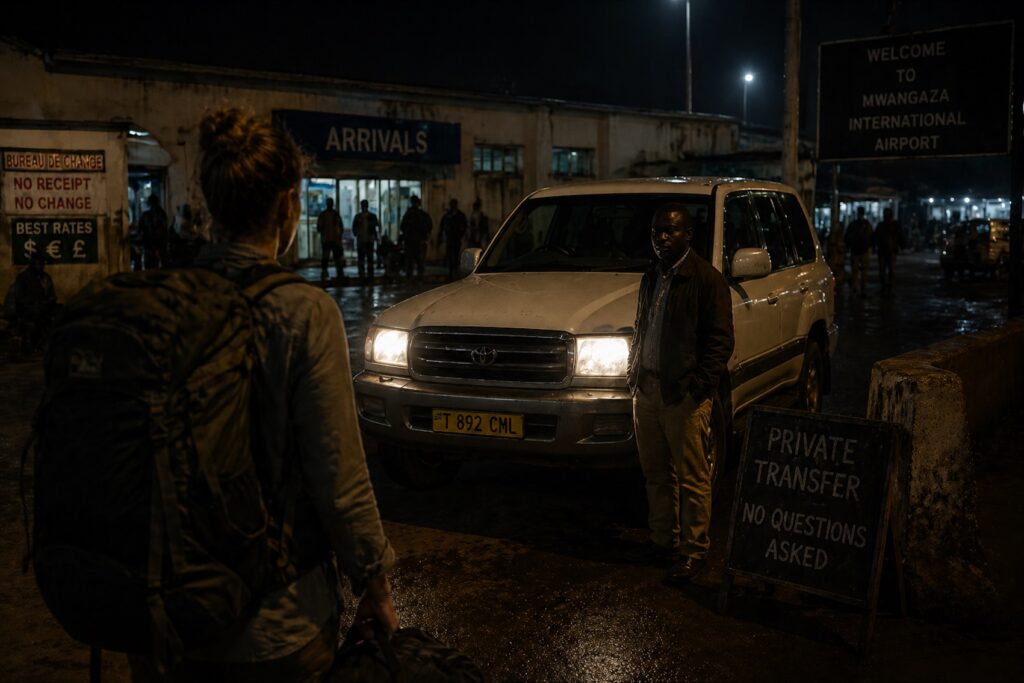
It’s 02:00. Somewhere unfamiliar.
You’ve been travelling for 18 hours. You land in-country at 2am. Hot. Tired. Slightly dehydrated. Mildly feral from airport food and sleep deprivation (which is fair enough, gourmet mile high food is a marketing oversell). You’re travelling solo as the expedition medic and meeting the team at the hotel. Outside the airport there’s one vehicle waiting. A white Land Cruiser with no company branding. One driver. You’ve no phone signal, there’s no obvious airport security presence and no way of verifying whether this is actually your pickup.
You stand there with your bags while the driver watches you from beside the vehicle. What are you thinking about?
Most people immediately spot the obvious red flags. Late arrival. Travelling alone. Communication failure. Unverified transport. But the more interesting problems are usually the quieter ones.
You’re tired and you just want to get to the hotel without offending anyone, so you start second guessing yourself.
“I’m probably overreacting.”
Humans are brilliant at explaining away danger and that’s where expedition security actually lives. Not in dramatic events but in stacked vulnerabilities. Fatigue, poor preparation, a lack of local knowledge, isolation and cash vulnerability to name a few. Individually these may not mean much but together they create opportunity for nefarious state and non-state actors.
Security failures become medical problems
One of the reasons I think expedition medics need at least a baseline understanding of security is because security failures rapidly become medical problems and medical incidents can become security incidents surprisingly quickly, and the once protective badge of ‘NGO worker’ is rapidly diminishing.
Anyone who has worked around crowds after a serious injury knows how fast dynamics can change. As soon as a casualty appears, so does everyone else and their mum (who may or may not be packing #HotFuzz). Someone starts filming, rumours spread and voices get louder.
Suddenly your nice tidy patient assessment is happening inside a rapidly deteriorating human environment and one of the hardest things for clinicians to accept is that sometimes scene safety overrides optimal care.
You cannot help if you become the casualty.
Situational awareness isn’t paranoia

People hear situational awareness and immediately picture someone wearing Oakleys, scanning rooftops while holding a rifle and wearing a covert earpiece.
In reality it’s much simpler than that.
Good situational awareness is recognising when something changes. You need to constantly environment scan to build a mental baseline of what “normal” looks like. Normal traffic; crowd behaviour; noise levels; movement.
Then you’ll notice if one day something feels different. The market that is usually chaotic is strangely quiet and groups of young men are standing around watching. Shops are closing early and people are moving away from an area. Maybe it’s nothing. Maybe it isn’t.
But the important point is this: don’t wait for certainty before increasing awareness. Most dangerous situations deteriorate gradually while people convince themselves everything is fine.
Don’t look tactical
This is one of my favourite security principles because it’s both important and deeply funny.
Do not look tacti-cool.
Unless you have an actual close protection team, which you almost certainly do not if you’re reading this post, wandering around fragile environments dressed like an off-brand special forces operator is an excellent way to attract exactly the sort of attention you don’t want. You do not want to look important. You want to look boring.
Be the grey person. That means no tactical patches, minimal “operator” energy, a cheap casio and an awareness that broadcasting wealth and significance is a sure fire way to rapidly loose your wealth and significance.
Just be forgettable.
Communication failure is where things unravel
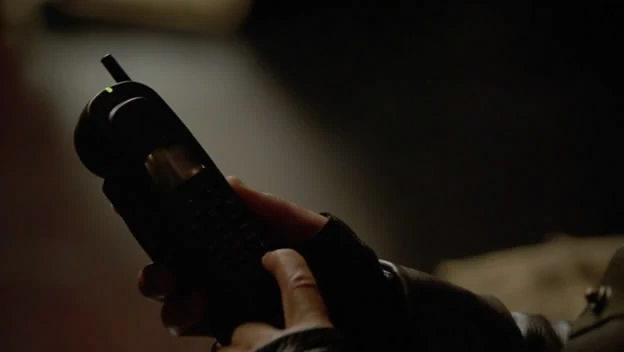
Almost every expedition incident gets worse when communication fails. A lot of people think communications planning means:
“We’ve got a sat phone.”
Cool story bro, needs more dragons.
But what happens when:
- It isn’t charged
- It gets stolen
- The person carrying it disappears
- Local laws prohibit it
- Using it attracts attention
- The network fails
- Someone geolocates it
Good communication planning is about redundancy.
And so one framework I teach is PACE:
- Primary
- Alternative
- Contingency
- Emergency
What’s your main system? What’s your backup? What happens if when both fail? And what’s the final option when everything goes sideways?
Also, and this is really important… Satellite communications are not invisible.
Depending on where you are and who is interested in you, communications can be monitored, intercepted or tracked. Just because something talks to space doesn’t mean it’s secure.
Security starts before departure
Most expedition security failures begin in planning. Research matters. Movement plans matter. Check-in systems matter. Communication redundancy matters. Knowing the political climate matters. Knowing where your embassy is matters. Knowing how you’re getting from the airport at 2am matters.
Security is rarely about doing exciting things, it’s about avoiding stupid situations in the first place. I speak from experience.
Final thought
Consider the last time you were travelling and felt unsafe…
Did the situation become unsafe suddenly? Or was it unsafe twenty minutes earlier and nobody noticed?
That’s the real skill, not becoming an action hero or learning how to throw a ninja star when an AK47 is staring you in the face.
Simply, get good at recognising deterioration early enough to avoid becoming part of the problem.
And trust me.
Having spent several unpleasant hours in stress positions with a bag over my head many years ago… don’t get kidnapped is significantly better advice than learn to get kidnapped well.
Useful Resources
Foreign travel, political risk & security advice
- UK Foreign, Commonwealth & Development Office (FCDO)
https://www.gov.uk/foreign-travel-advice - Overseas Security Advisory Council (OSAC)
https://www.osac.gov - ACLED (Armed Conflict Location & Event Data)
https://acleddata.com - Transparency International
https://www.transparency.org
Travel health & disease intelligence
- Travel Health Pro
https://travelhealthpro.org.uk
Navigation & offline mapping
- Maps.me
https://maps.me
Further reading
- Preparedness and expedition resilience
https://www.realfirstaid.co.uk/preparedness-1 - Secure mobile phones and operational security
https://www.realfirstaid.co.uk/secure-mobile-phones - Building a remote survival / go bag
https://www.realfirstaid.co.uk/remotesurvivalkit